
Food labels contain essential information about what you’re eating, but they can often be confusing or misleading. Understanding how to read and interpret food labels can help you make healthier choices, avoid hidden ingredients, and ensure you’re getting the right nutrients for your body.
Let’s break down what’s listed on food labels, what each section means, and why it matters for your health.
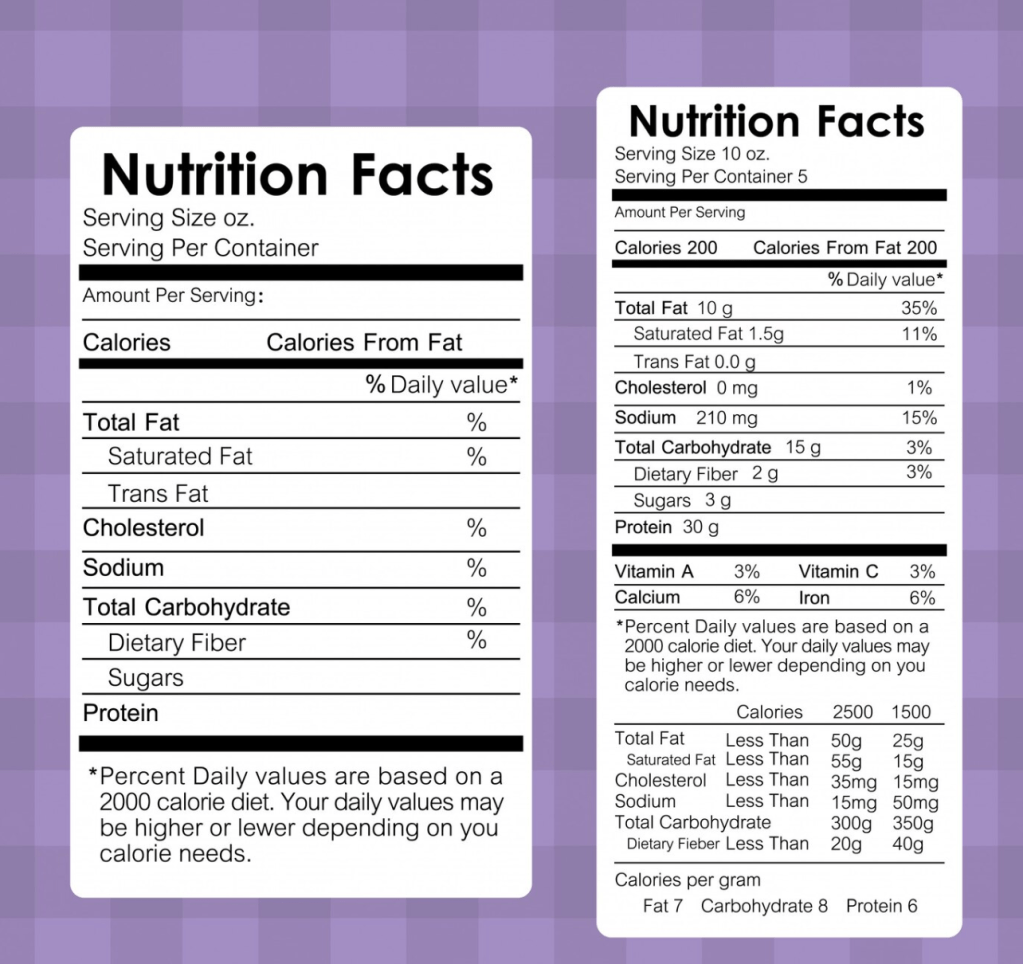
🔍 Why Food Labels Matter
Food labels provide critical details about:
✔ Nutritional content – Calories, macronutrients (protein, carbs, fats), vitamins, and minerals.
✔ Ingredients – What’s actually inside the product.
✔ Additives & preservatives – Chemicals or artificial ingredients you may want to avoid.
✔ Allergens – Information about common food allergens like nuts, dairy, and gluten.
💡 Knowing how to read labels helps you avoid misleading marketing claims and make healthier decisions!
📖 Key Sections of a Food Label & What They Mean
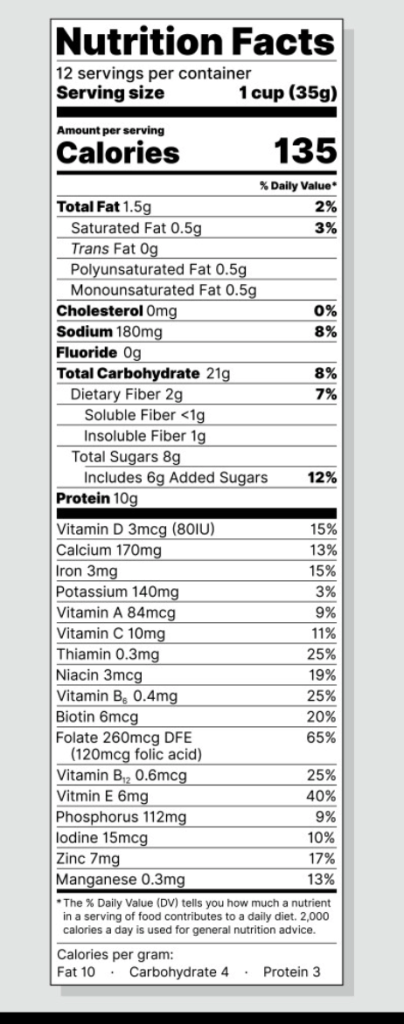
1️⃣ Serving Size & Servings Per Container
- Why it matters: The nutrition facts apply per serving, not the entire package.
- What to check: Many products look low in calories, but if you eat multiple servings, the calorie count adds up quickly.
💡 Example: A bag of chips may list 150 calories per serving, but if the bag contains 3 servings, eating the whole bag = 450 calories.
2️⃣ Calorie
- Why it matters: Calories measure the energy a food provides.
- What to check: A higher calorie count isn’t necessarily bad—it depends on the food’s nutritional value.
💡 Example: 200 calories from nuts (healthy fats & protein) is better than 200 calories from soda (empty sugar).
3️⃣ Macronutrients: Carbohydrates, Proteins & Fats
Carbohydrates
✔ Dietary Fiber – Aids digestion and keeps you full. Look for at least 3-5g per serving.
✔ Sugars – Natural sugars (fruit, dairy) are okay, but watch for added sugars (high fructose corn syrup, cane sugar).
💡 Tip: The American Heart Association recommends no more than 24g (6 tsp) of added sugar per day for women and 36g (9 tsp) for men.
Proteins
✔ Helps build muscle and repair tissues.
✔ Look for high-quality protein sources (lean meats, beans, nuts).
💡 Tip: If the product is labeled “high in protein,” it should contain at least 10g per serving.
Fats
✔ Unsaturated Fats – Found in avocados, nuts, olive oil (healthy).
✔ Saturated Fats – Found in butter, cheese, processed meats (limit intake).
✔ Trans Fats – Avoid these! They raise bad cholesterol and increase heart disease risk.
💡 Tip: If you see “partially hydrogenated oils,” that means hidden trans fats are present, even if the label says “0g trans fat.”
4️⃣ Micronutrients: Vitamins & Minerals
- Why it matters: These nutrients support overall health, from boosting immunity (Vitamin C) to strengthening bones (Calcium).
- What to check: Look for foods rich in Vitamins A, C, D, Calcium, Iron, and Potassium.
💡 Tip: The % Daily Value (%DV) tells you how much of each nutrient you’re getting based on a 2,000-calorie diet.
✔ 5% DV or less = Low in that nutrient
✔ 20% DV or more = High in that nutrient
5️⃣ Ingredients List: What’s Really Inside?
- Why it matters: Ingredients are listed from highest to lowest quantity, meaning the first few items make up most of the product.
- What to check:
✔ Look for whole, recognizable foods (e.g., oats, nuts, fruit).
✔ Avoid long lists of artificial ingredients & chemicals.
✔ Watch for hidden sugars – Names like cane syrup, dextrose, maltose are just different forms of sugar.
💡 Tip: If an ingredient list is too long and full of words you don’t recognize, it’s probably highly processed!
6️⃣ Allergen Information
- Why it matters: Labels highlight allergens like nuts, dairy, gluten, soy, and eggs.
- What to check: If you have allergies or sensitivities, read this section carefully!
💡 Tip: Even if a product doesn’t contain an allergen, check for warnings like “may contain traces of…” due to possible cross-contamination.
⚠️ Watch Out for Misleading Food Label Claims!
🚨 Natural – Doesn’t mean organic or healthy. It can still contain preservatives and additives.
🚨 Sugar-Free – Might contain artificial sweeteners like aspartame, which some people prefer to avoid.
🚨 Fat-Free / Low-Fat – Often higher in sugar to compensate for lost flavor.
🚨 Whole Grain – Some products contain very little whole grain—always check the ingredients list!
💡 Tip: Always read the full label, not just the front packaging!

🌟 Final Thoughts: How to Use Food Labels for Healthier Choices
✔ Start with the ingredients list – Choose foods with real, whole ingredients.
✔ Check serving sizes – Avoid hidden calorie overloads.
✔ Limit added sugars & unhealthy fats – Focus on fiber, protein, and healthy fats.
✔ Look for essential vitamins & minerals – Prioritize nutrient-dense foods.
By learning to decode food labels, you can make smarter, healthier food choices and take control of your nutrition.
💡 Next time you go grocery shopping, try reading a food label and see what surprises you! What’s the most misleading label you’ve come across? Share in the comments! 😊✨





 Well & Good
Leave a comment